How to Drive Safely on Snow: A Practical Guide for Front-Wheel-Drive Vehicles
When it comes to snow driving, best not to be typical novice that does not respect the new obstacle on the terrain.
Ground wetness means less traction. Banks of snow means fewer avenues of travel. You have to use your eyes, set realistic expectations, practice proper planning and sensibility to reduce the chance of slipping.
If this topic applies to you, you likely live in a northern region or some place special that experiences lots of snow during a few months of the year.
General Knowledge to apply to your routine.
Before you go, do a little preparation by observing.
Tread and tire pressure - make sure they are deep enough for a coin to sit in at the top. Use a pressure gauge to make it easy to see it’s in the normal range.
Remove excess snow of the roof and valleys to prevent debris from happening to others.
Warm it up before you leave by starting the heater a bit in advance.
Pack extra supplies in case you make it into a roadside situation where you may need to help yourself
Flashlight
Warm Blankets
Flares
Tire Pressure Gauge
Shovel
Phone Charger with battery
Winter Gloves
Extra Warm clothing (including wooly socks)
How front drive works: Weighted front and limited steering
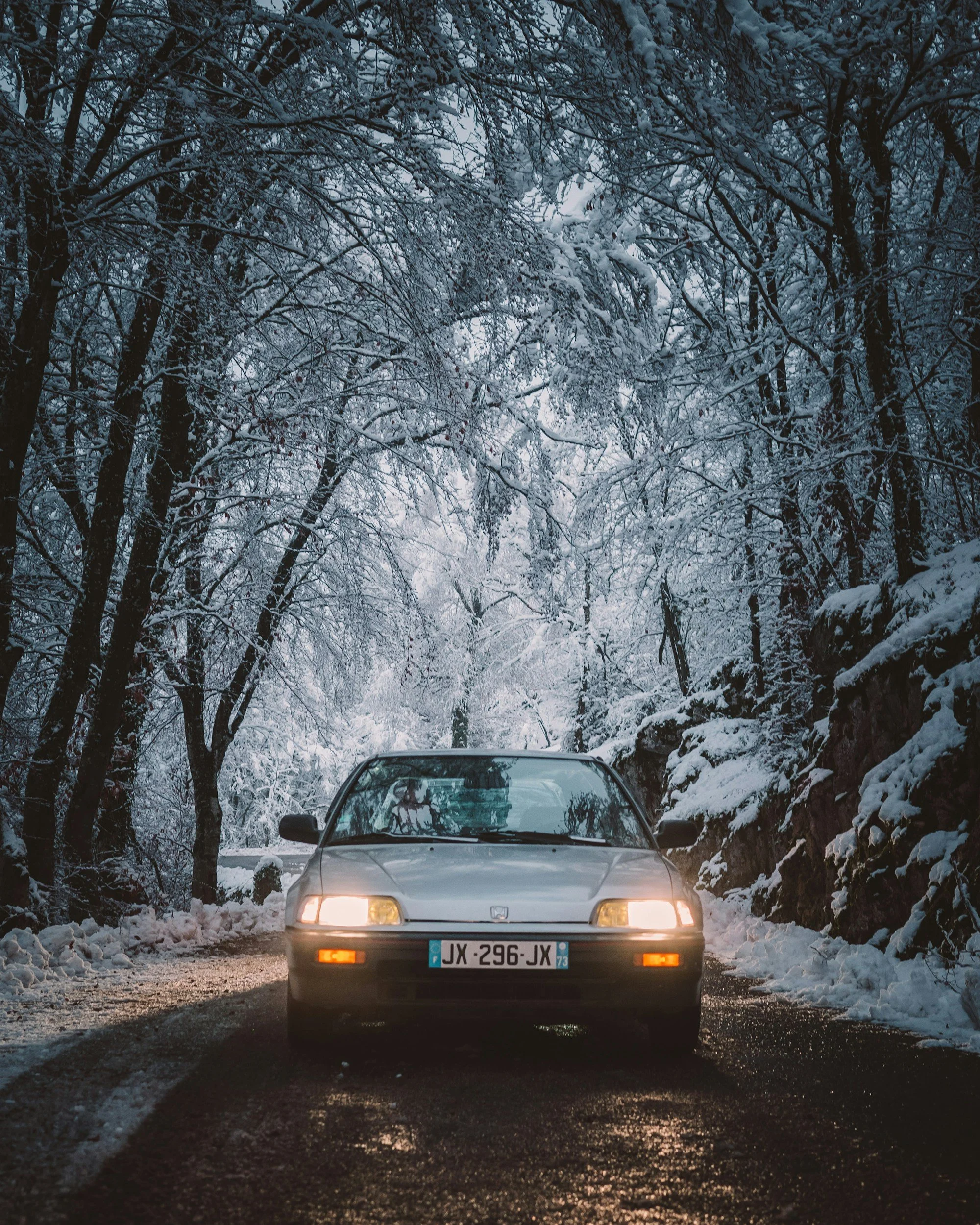
Front Wheel Drive, or FWD for short, provides realistic feedback to the driver and can be effortlessly easy to operate when understanding the terrain properly.
Little need for special tires, accessories or a seasoned pro driver - it’s all about mindset and practice under the right pretext.
Give your driver an orientation by showing them an article that prepares them for the worst case scenario, coach them on the practices you would like to see and teach them how to avoid it again next time with proper references.
After all, this is the way of a good driver coach..
Driver Inputs: No sudden moves
Acceleration:
Ease onto the gas. Feather the throttle and let the car roll forward gently. If you spin, back off the gas slightly until you regain traction.
Shifting
Don’t shift during while depressing the accelerator - relief and slow pressure is necessary for smooth delivery
Use second gear (if your car allows manual gear selection) to reduce wheel spin when starting from a stop.
You will know when your are going far too fast whilst shifting when you notice a slight increase in yaw, direction change is noticeable.
Steering:
Steer first, brake second if you must avoid an obstacle. On snow, trying to do both at once often leads to a skid.
Braking:
Leave extra space. Aim for at least eight to ten seconds of following distance.
That’s roughly triple what you’d allow on dry pavement.
Anticipate stops early. Begin braking sooner and with light pressure.
If your car has ABS (Anti-lock Braking System): Press the brake pedal firmly and let the system do its work — you’ll feel pulsing, but don’t lift off.
If no ABS: “Pump” the brakes lightly to avoid locking up.
Cornering: Carefully and without adding pressure, ease off before you get there
Slow down before the turn, not during it. Braking mid-corner is a common cause of spinouts.
Keep a steady throttle through the turn to maintain traction on the front wheels.
Look where you want to go. Your hands will follow your eyes — a simple but powerful rule.
If the car begins to slide (understeer), ease off the throttle slightly and gently steer back toward your intended path. Don’t overcorrect.
Hills: Even more careful climbing prevents slip
Uphill:
Approach with a little momentum.
Keep steady throttle — don’t floor it or you’ll spin.
Downhill:
Go slow before the descent.
Downshift to let engine braking control your speed.
Avoid holding the brakes continuously — that can lock the wheels and cause sliding.
Skid: Stay calm
Even experienced drivers can lose traction. The key is to stay calm and do less, not more.
Front-wheel skid (understeer): The car won’t turn as expected — gently lift off the gas, keep steering toward your path, and let the tires re-grip.
Rear-wheel skid (oversteer): If the back end slides out, steer into the skid (in the direction the rear is sliding) until the car straightens.
Never slam the brakes — it only makes the slide worse.
Visibility: Use the defogger and stop before you run out of room.
Snow driving isn’t just about traction — it’s also about seeing and being seen.
Keep headlights on low beam in falling snow for best visibility.
Use defrosters to prevent windshield fog.
Watch for changing textures: shiny = icy, matte = grippy.
Avoid snow ridges or icy ruts — they can pull the car unexpectedly.
Be aware of what will disable you by checking the forecast and looking about before you go - rain or snowfall may be too intense.
Even the best driver can’t overcome physics. If snow is deep, temperatures are below freezing, or visibility is poor, sometimes the safest choice is not to drive at all.
If you must go, tell someone your route and expected arrival time.
Takeaways:
Smooth is safe — no jerky inputs.
Anticipate everything early — braking, turning, acceleration.
Maintain space and visibility — braking early wins makes it to finish.
Stay calm if the car slides — gentle corrections win, don’t add more in every direction.
Respect the limits — sometimes the best skill is knowing when not to drive.
Find more information about driving dynamics with the car you enjoy as a Member.
Download our visual Driving Safety Handout by simply signing for our newsletter, link here.