the story of the Toyota Prius
In case you wondered about the value add of a Hybrid vehicle over the Gas only option, consider how they came into popularity. The Prius.
In the quiet hum of a Tokyo garage in the late 1990s, a group of engineers hunched over blueprints and circuit diagrams, dreaming up a car that could challenge the very idea of what an automobile should be. They were building what would become the Toyota Prius—a vehicle that married a gasoline engine with an electric motor in a way that felt almost magical. When it debuted globally in 1997 and arrived in the U.S. in 2000, it was one of the first mass-produced hybrids, using Toyota’s innovative Hybrid Synergy Drive (HSD) system to blend power sources for the sake of efficiency and emissions reduction. Even the early Prius used its small battery and sophisticated control systems to capture braking energy and balance propulsion, helping drivers see fuel economy numbers unheard of in a conventional car of its era.
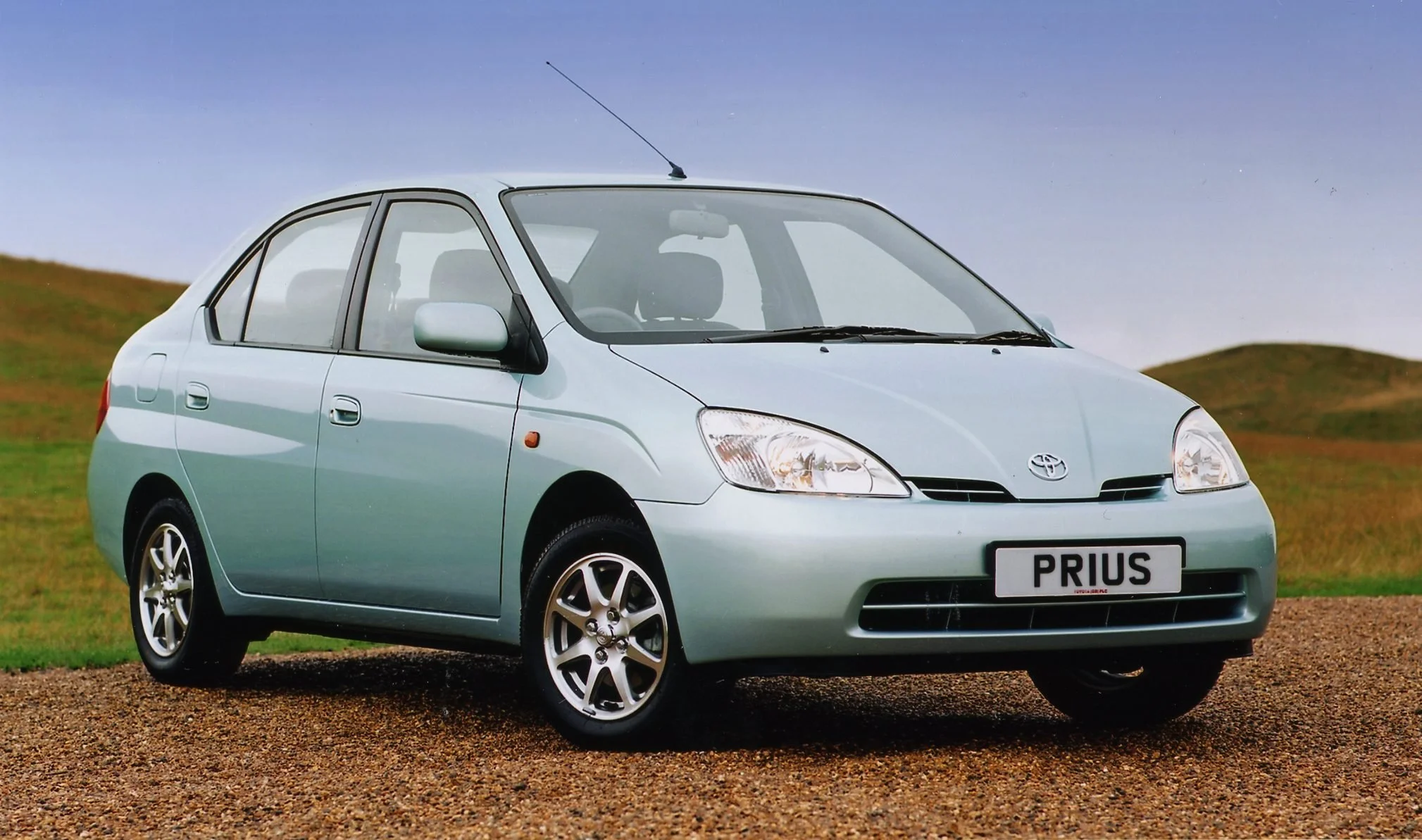
Introduction of the Toyota Prius
Photo credit: Toyota North America
The added weight of the power electronic components and battery are compensated by the driving profile of the driver. More weight means more electric only range at a fraction of the price. You can save money but you have to use your time wisely.
By the time the third generation arrived around 2010, the Prius had become the world’s best-selling hybrid. Its hybrid system was substantially re-engineered to boost fuel economy—EPA combined ratings reached about 50 mpg—and reduce emissions, while offering smoother driveability through power-split control innovations.
The Plug-In Hybrid option - The option with more weight and can still go the distance.
Then came a new idea: what if the Prius could drive farther on electric power alone? This led to the first Prius Plug-in Hybrid unveiled in 2011 and launched in markets around 2012. It retained the trusted Hybrid Synergy Drive but added a larger lithium-ion battery that you could recharge from an external source. Early plug-in models could muster roughly 14–23 miles (23–37 km) of electric-only driving before the gasoline engine resumed duty—an important early step toward reducing urban tailpipe emissions.

Prius Prime Plug-In Hybrid.
Photo Credit: J.D. Power and Associates
Further innovation of the Hybrid platform in Sequenced model year production
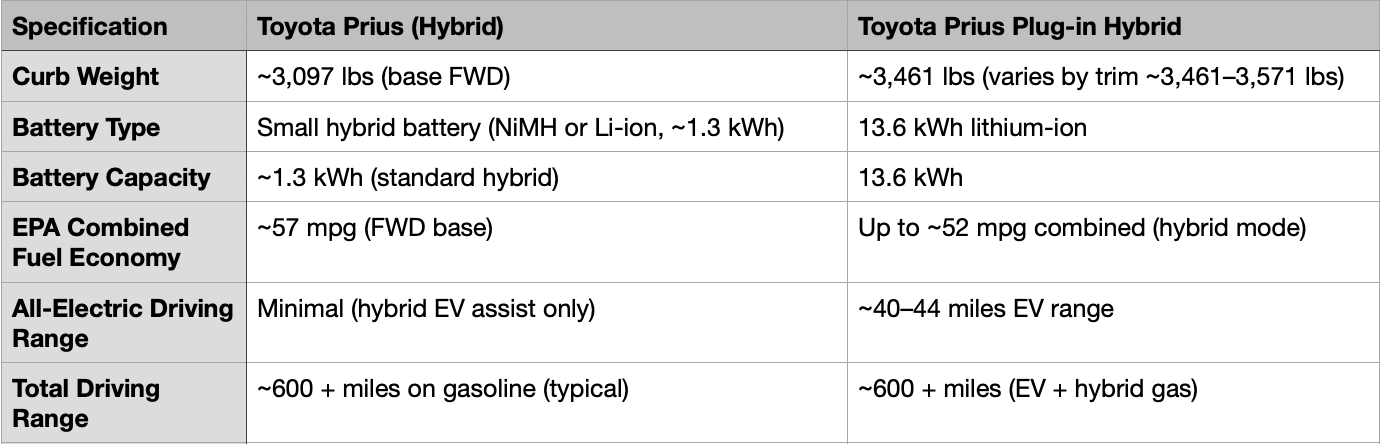
That extra battery capacity comes with trade-offs: while the conventional Prius’s hybrid setup keeps curb weight lower and maximizes fuel economy across long journeys without plugging in, the plug-in’s larger battery adds weight—often several hundred pounds more than a standard hybrid—so the PHEV’s pure gasoline mode fuel economy is slightly lower when the battery is depleted. The plug-in earns its keep in EV range and flexibility, whereas the conventional hybrid offers lower weight and greater simplicity.
Thus, from the first hybrid hatchbacks that dared to rethink efficiency to today’s dual-mode plug-in variants that mix miles of electric driving with efficient long-range hybrid travel, the Prius story is one of engineering dreams turned into real roads. Whether you choose the lighter, self-charging hybrid or the slightly heavier plug-in with its expanded electric range, the legacy of innovation that started in that Tokyo garage still hums beneath the hood.
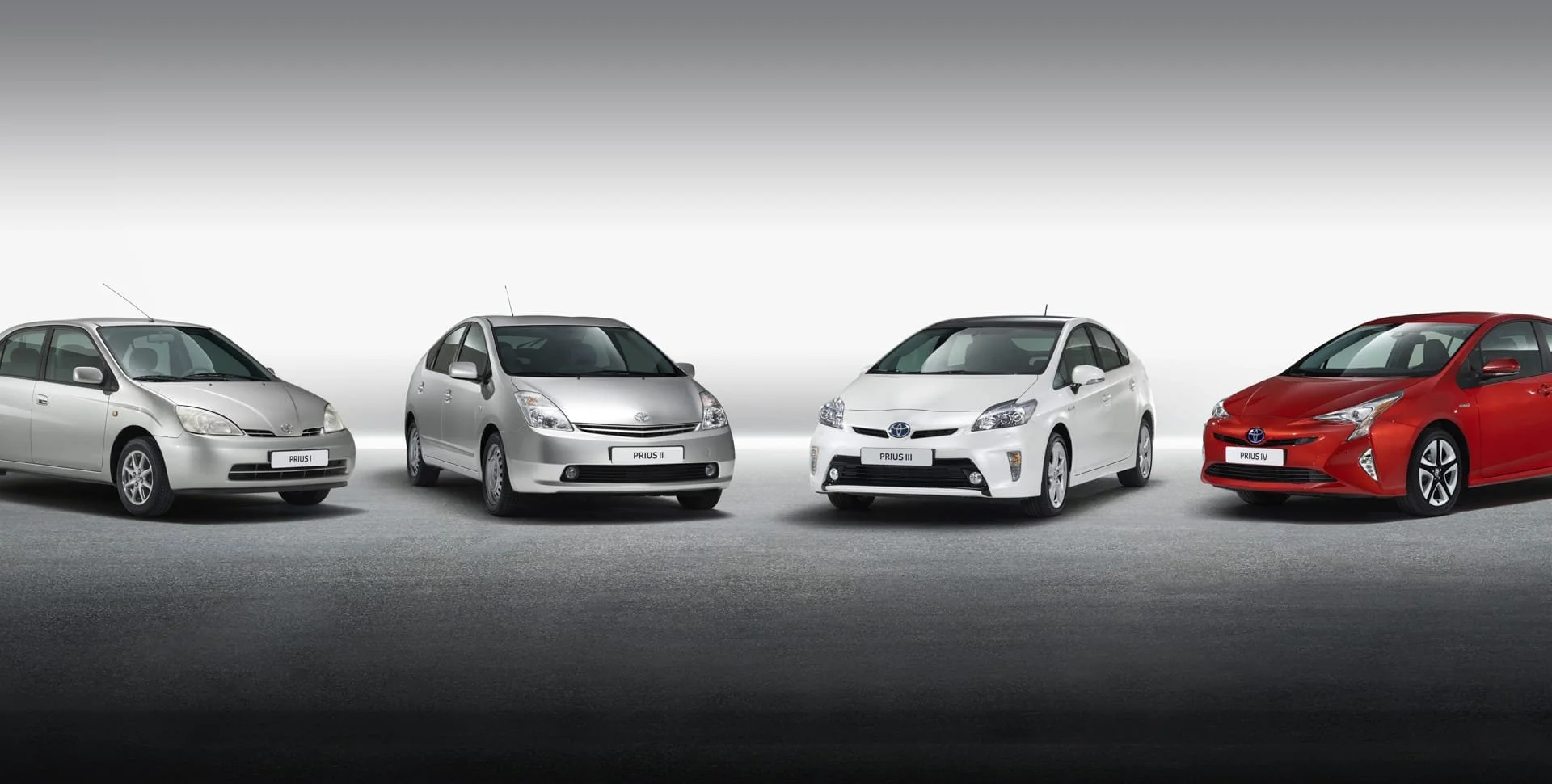
Evolution of the Prius (until 2011).
Photo credit: Toyota
The Prius is designed to be a lightweight vehicle with optimal airflow, weight, and power for maximum efficiency on the road. Built for a purpose that is an attestation to what purpose built engineering can do for a production vehicle.
Look at the numbers: